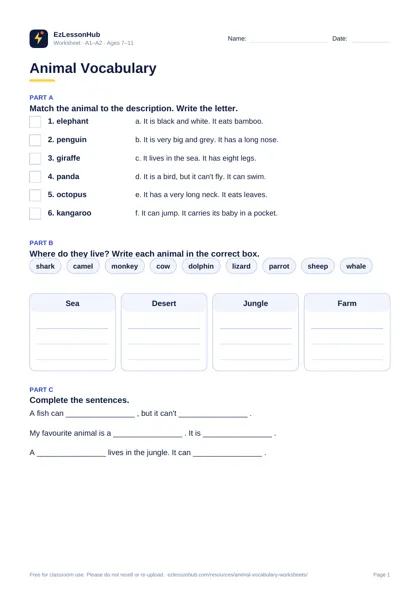
Animal Vocabulary Worksheets
Match, sort, and describe 15 animals. A core page, a challenge page, and a speaking game — plus an answer key.
Printable worksheets, game boards, speaking cards and classroom tools. Preview every page, then download the PDF — free, no sign-up.
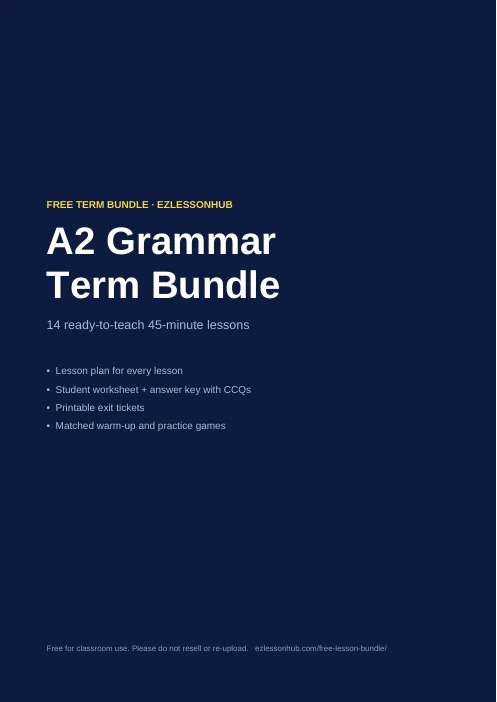 Planning a whole term? Get every lesson for your level in one free PDF.Get my bundle
Match, sort, and describe 15 animals. A core page, a challenge page, and a speaking game — plus an answer key.
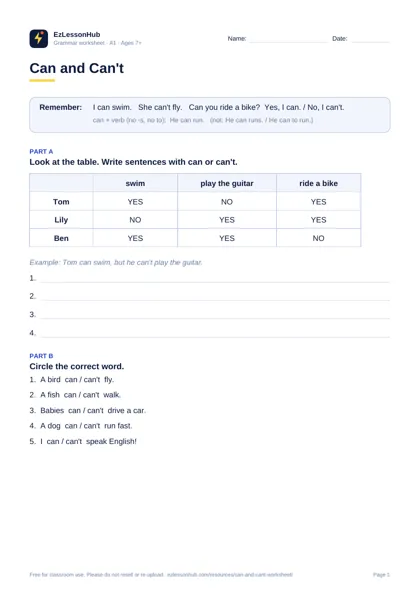
A clear grammar box, controlled practice, a class survey, and a personal writing task for teaching can and can't.
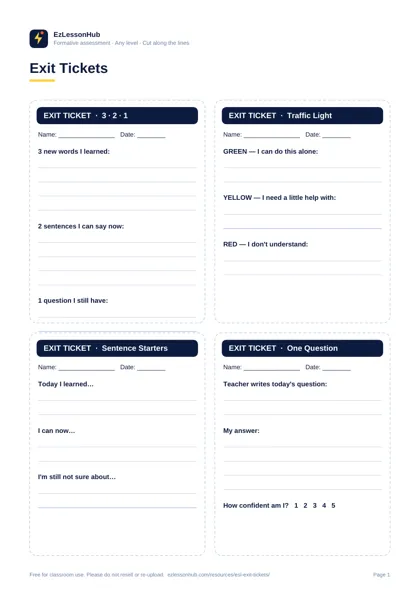
Four exit-ticket formats — 3-2-1, traffic light, sentence starters, and one question — to check learning in the last five minutes.
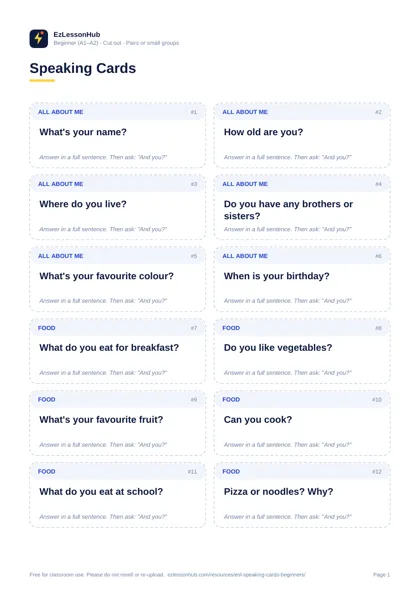
24 beginner question cards across four everyday topics, ready to cut out for pairs and small groups.
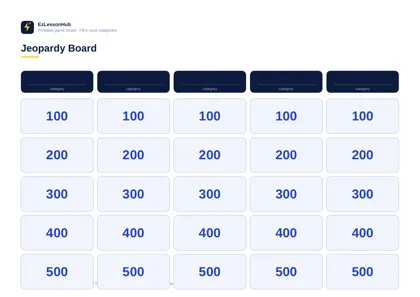
A printable 5 × 5 Jeopardy board, a question planner, and a four-team scoreboard — no slides needed.
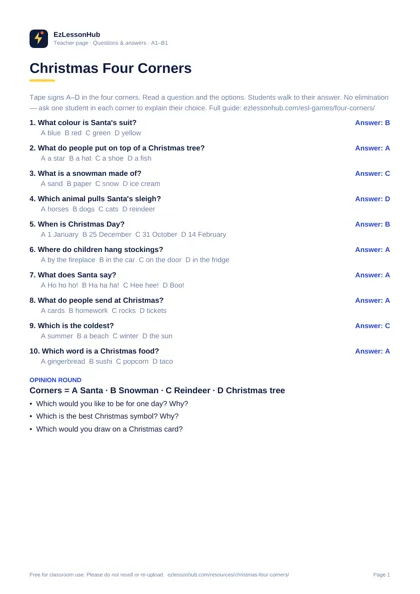
Four large corner signs plus 10 Christmas quiz questions and an opinion round — print, tape, play.
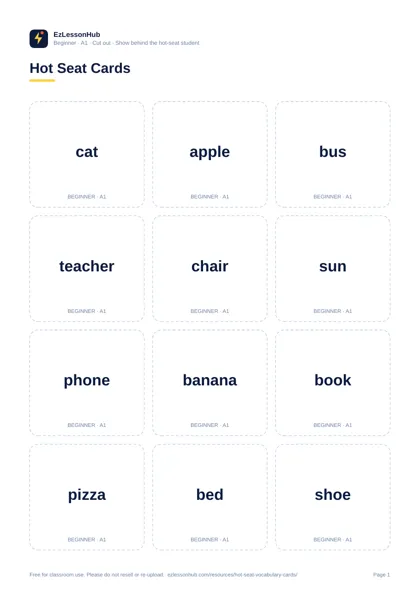
36 large word cards in three levels for Hot Seat, charades, and describing games.
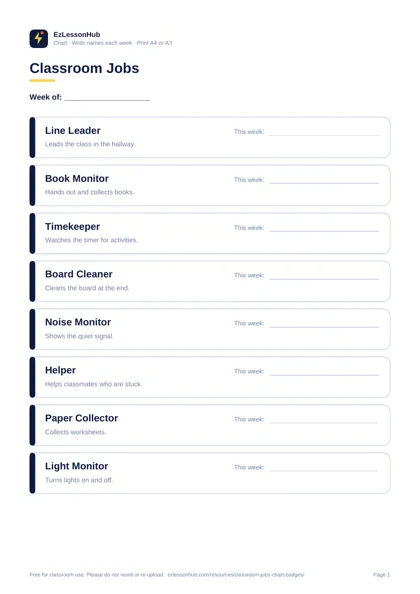
A weekly jobs chart and 8 matching badges to give students real responsibility in class.
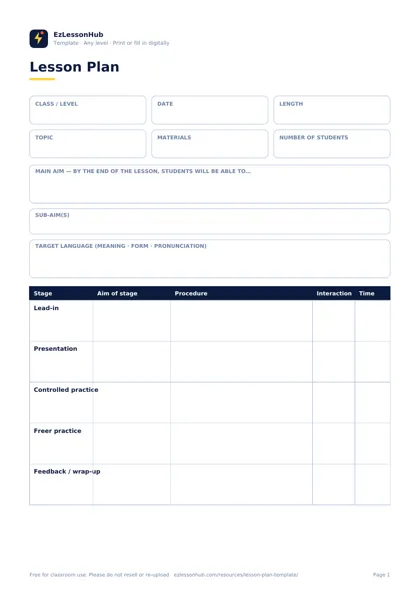
A two-page lesson plan template: aims, target language, staged procedure, anticipated problems, differentiation and reflection.
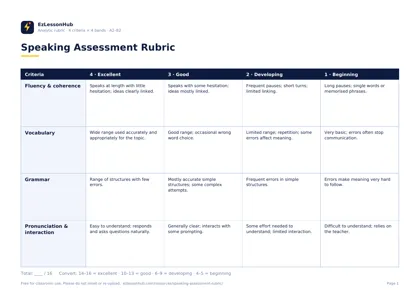
An analytic speaking rubric (fluency, vocabulary, grammar, pronunciation & interaction) with a class score sheet.
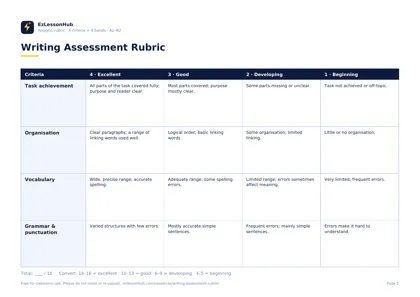
An analytic writing rubric (task achievement, organisation, vocabulary, grammar) with a class score sheet.
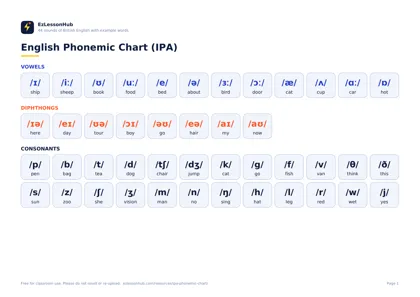
A clean, printable chart of the 44 sounds of British English with an example word for each sound.
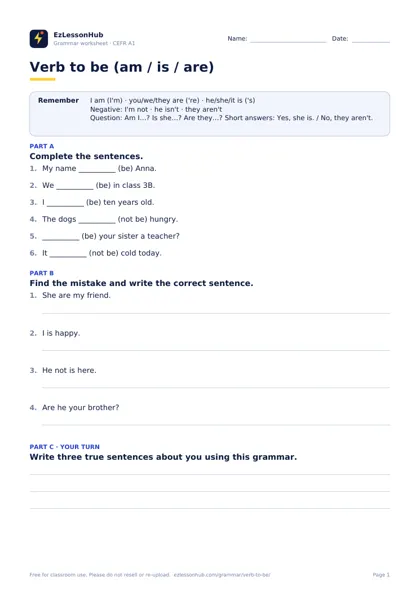
The first verb learners need: to say who and what things are, and to describe them.
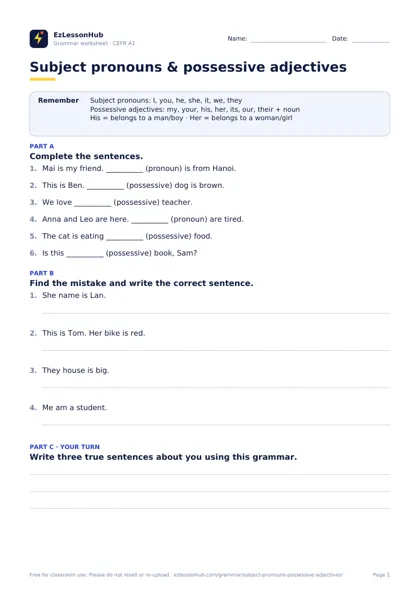
I/you/he/she/it/we/they and my/your/his/her/its/our/their — the words that tell us who and whose.
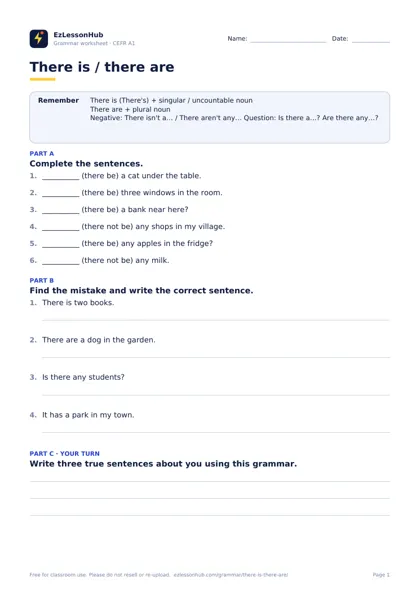
Used to say that something exists or is in a place — perfect for rooms, towns and pictures.
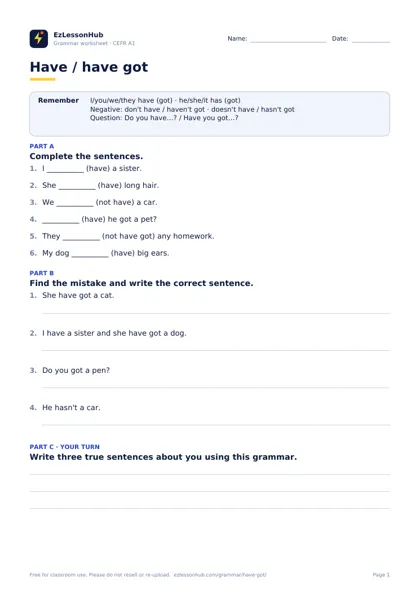
Talk about possessions, family, and appearance.
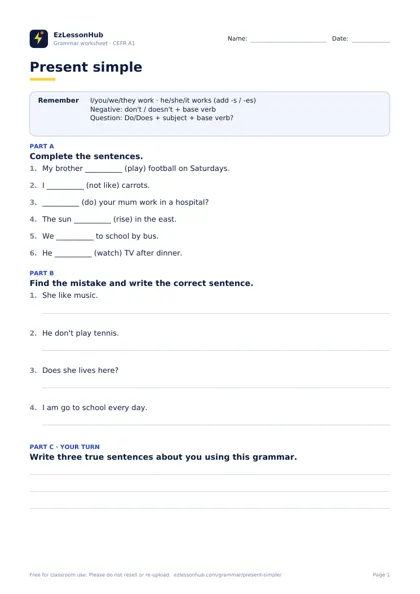
For habits, routines, facts and things that are generally true.
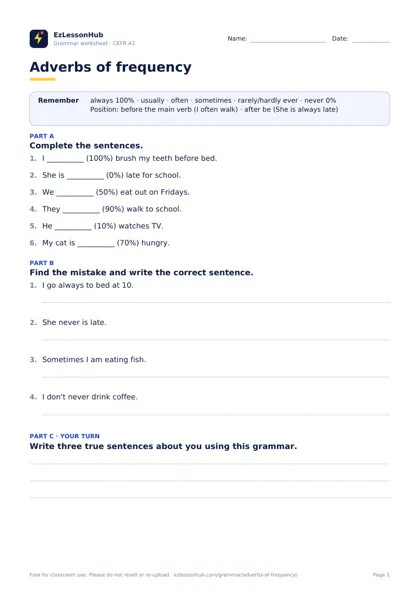
always, usually, often, sometimes, rarely, never — how often things happen.
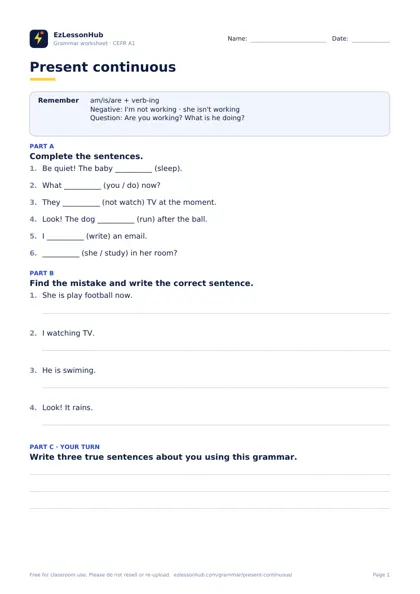
For actions happening now and temporary situations.
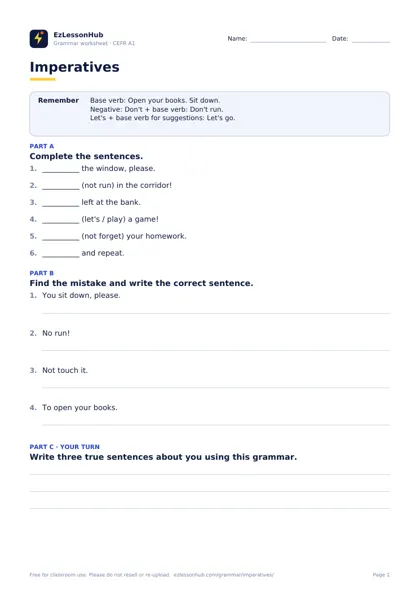
Instructions, commands and directions — essential classroom language.
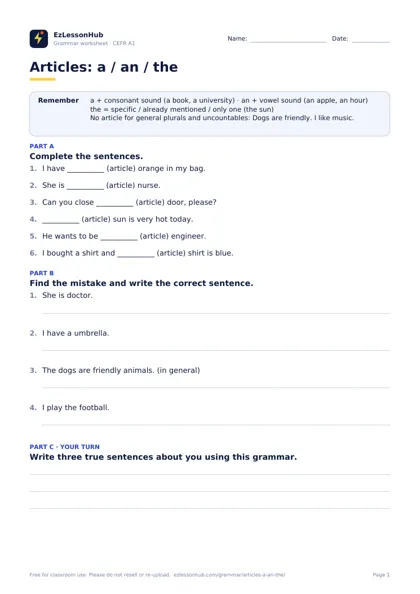
a/an for one thing mentioned for the first time or any one; the for a specific thing both people know.
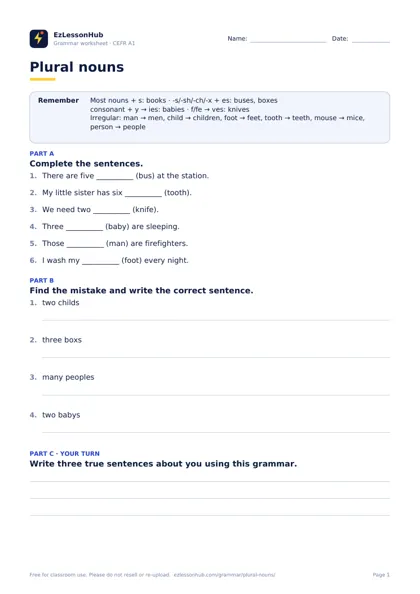
Regular -s/-es plurals and the common irregular plurals.
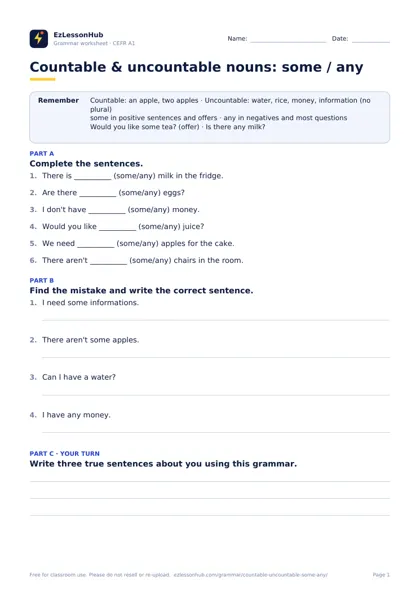
Nouns we can count (apples) vs. nouns we can't (water, rice), with some and any.
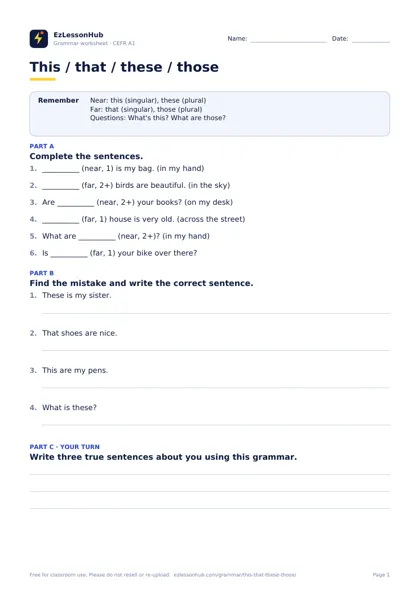
Demonstratives to point to things near and far.
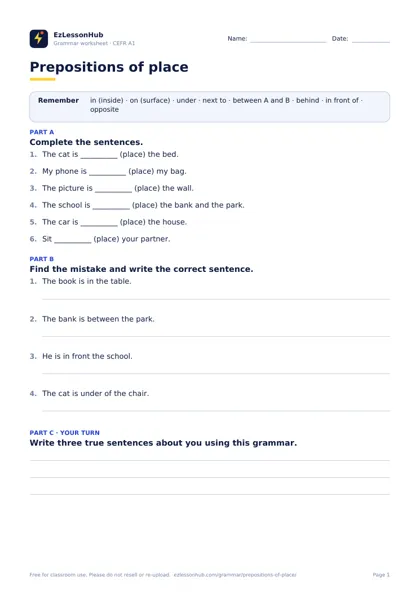
in, on, under, next to, between, behind, in front of, opposite.
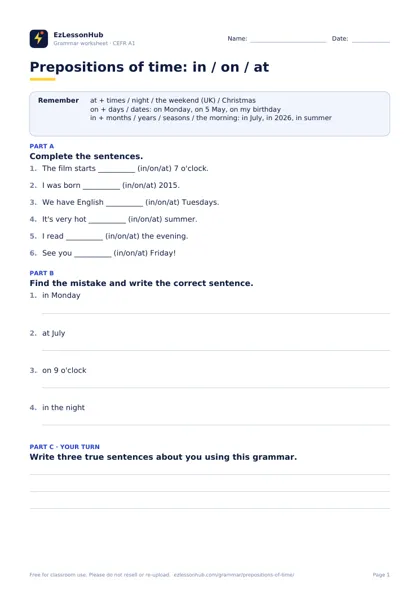
in for months, years, seasons and parts of the day; on for days and dates; at for times and festivals.
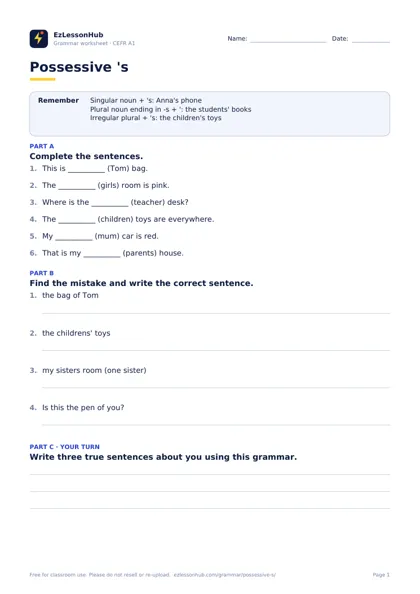
Show who something belongs to: Tom's bike, my parents' house.
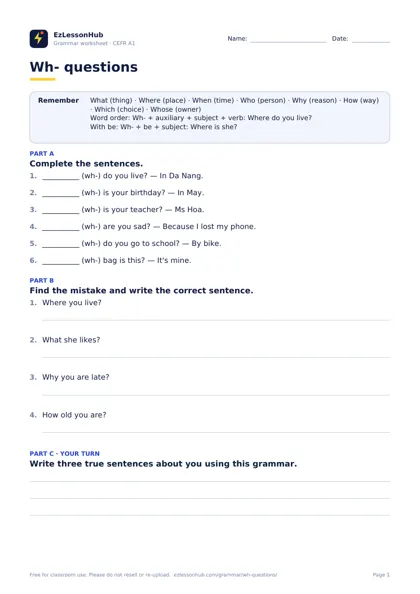
what, where, when, who, why, how, which, whose — asking for information.
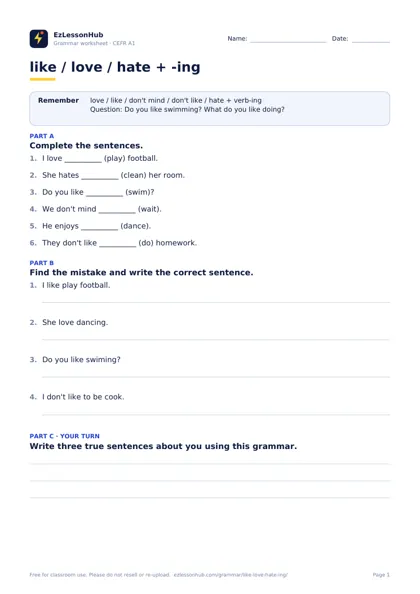
Talk about likes and dislikes with verb + -ing.
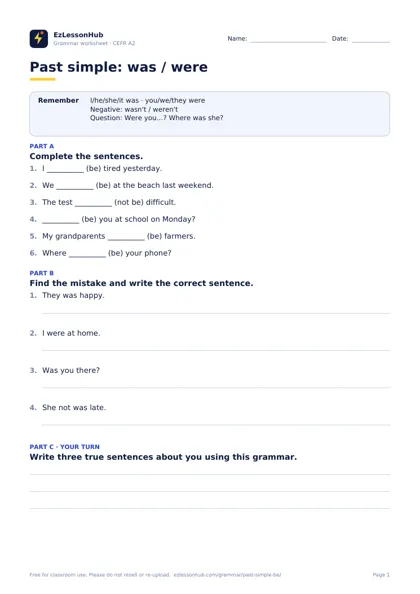
The past of the verb to be.
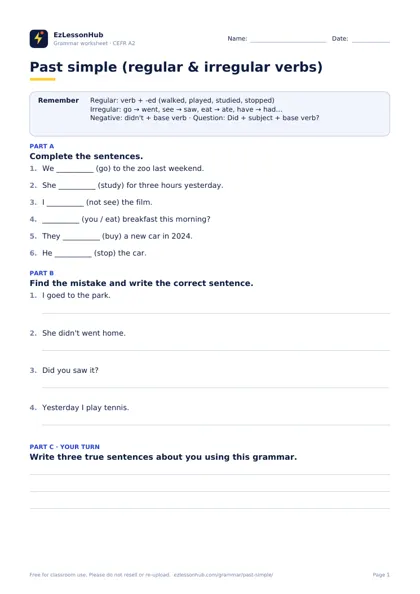
For finished actions at a specific time in the past.
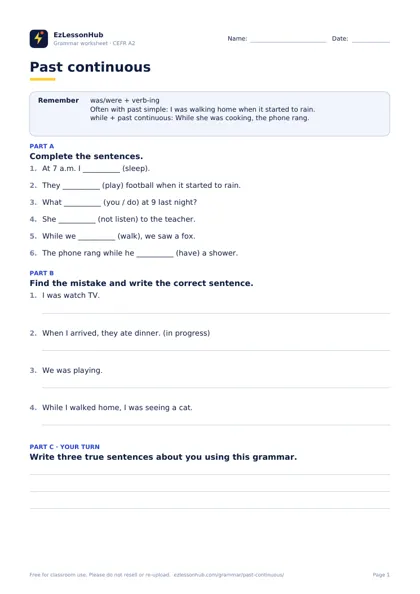
For actions in progress at a moment in the past, often interrupted by another action.
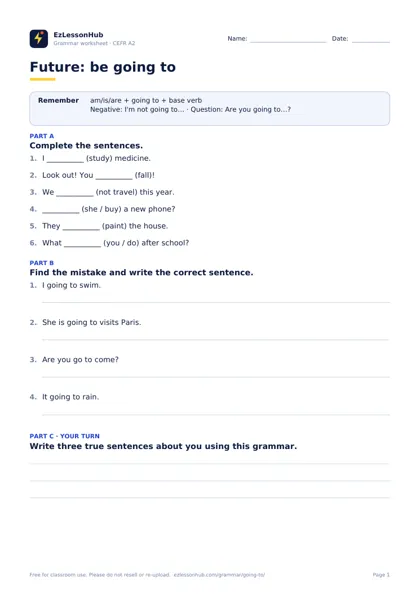
For plans and intentions, and predictions based on evidence.
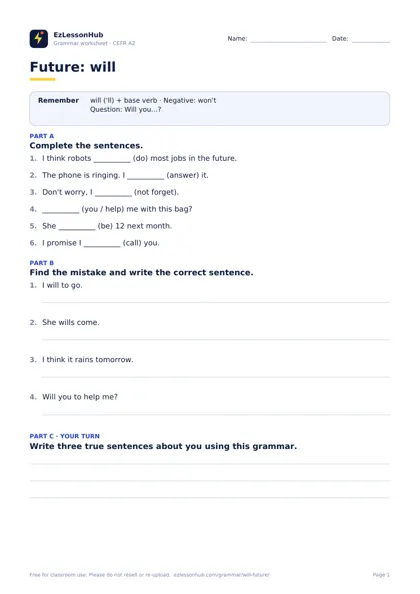
For predictions, instant decisions, offers and promises.
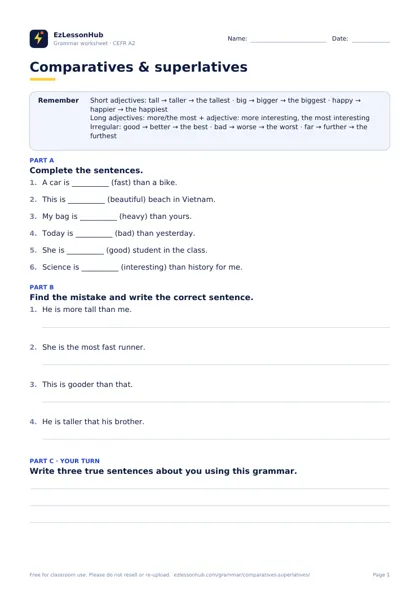
Compare two things (bigger than) and pick out one from a group (the biggest).
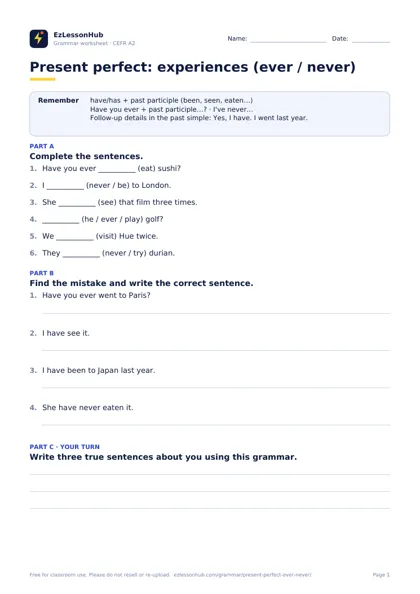
Talk about life experiences without saying when.
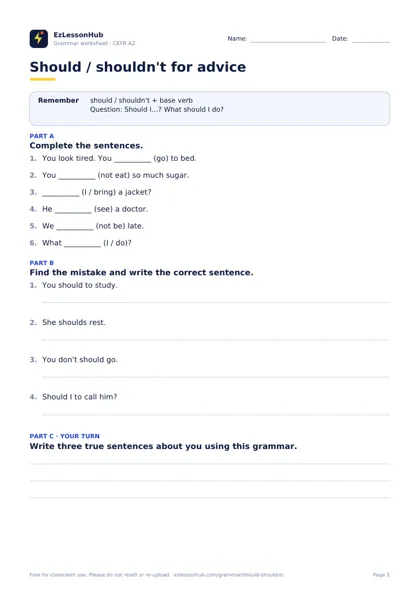
Give and ask for advice.
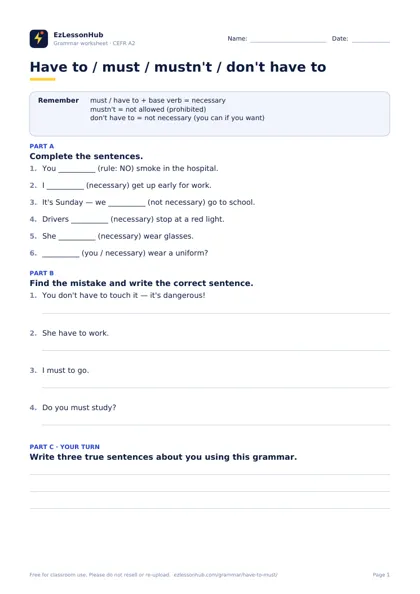
Obligation, prohibition and lack of obligation.
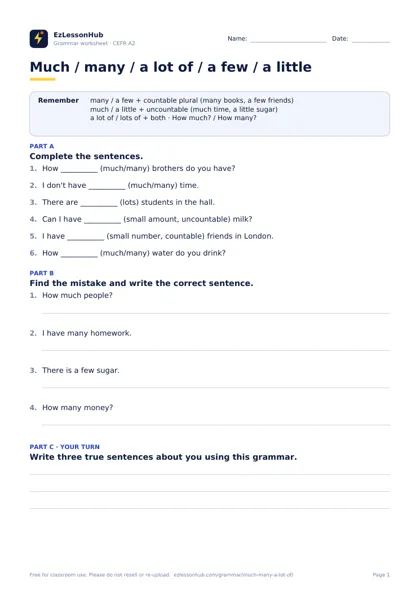
Quantifiers with countable and uncountable nouns.
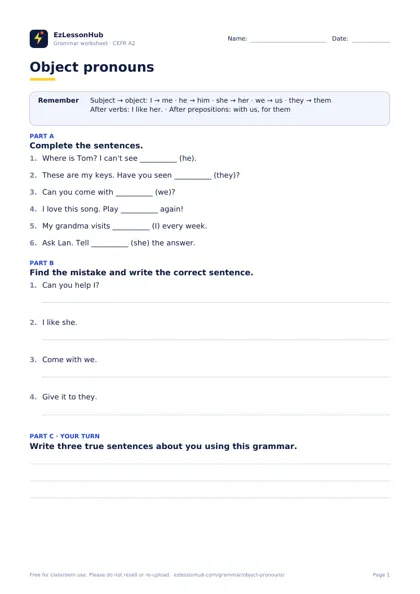
me, you, him, her, it, us, them — after verbs and prepositions.
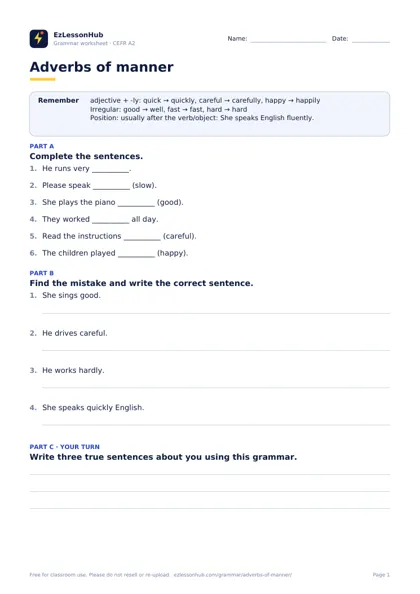
How we do things: quickly, slowly, well, hard.
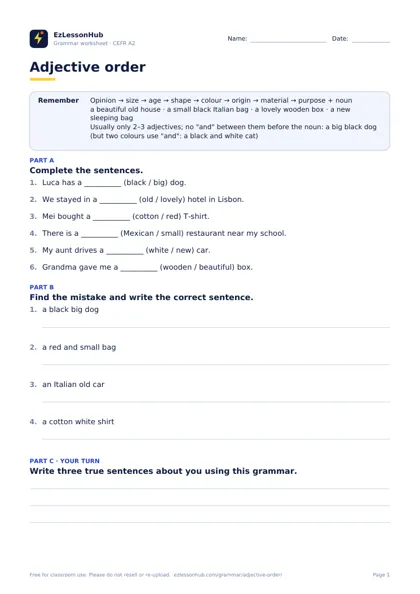
When we use two or more adjectives before a noun, they usually go in a fixed order.
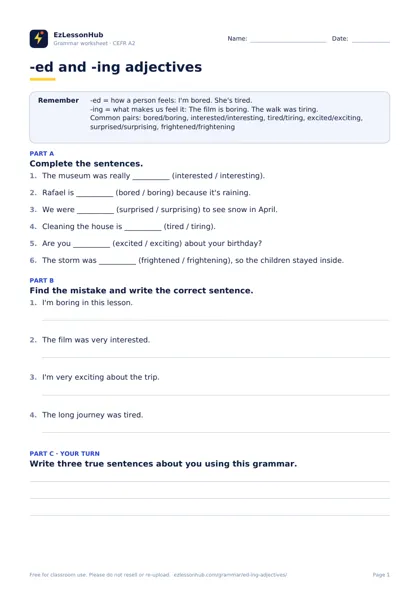
-ed adjectives describe how people feel; -ing adjectives describe the thing or person that causes the feeling.
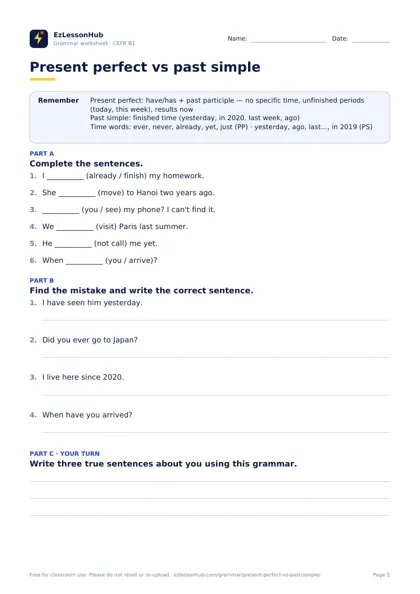
Unfinished time and life experience vs. finished, specific past time.
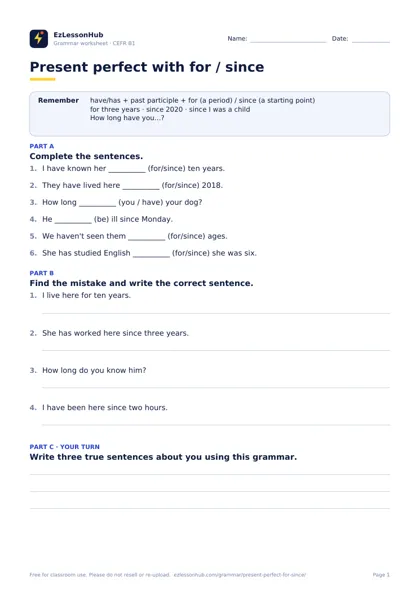
Actions and states that started in the past and continue now.
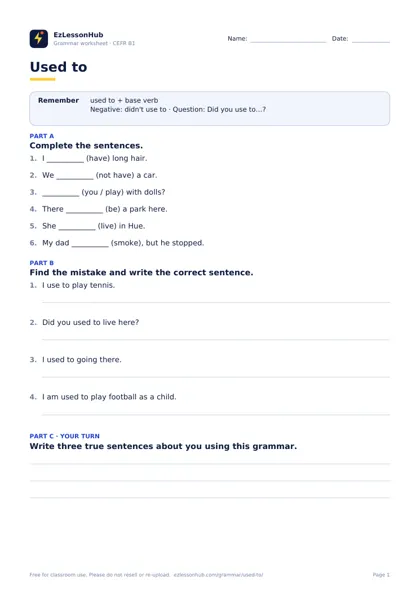
Past habits and states that are no longer true.
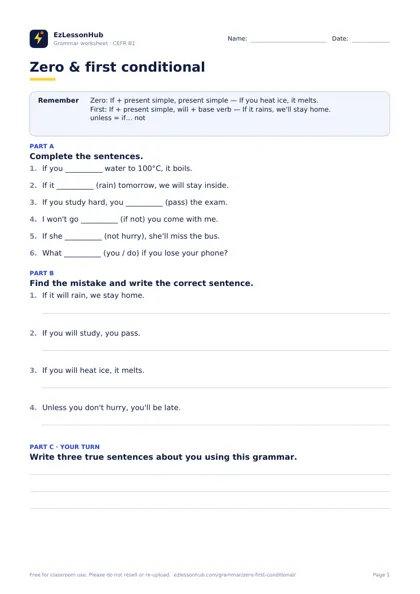
General truths (zero) and real future possibilities (first).
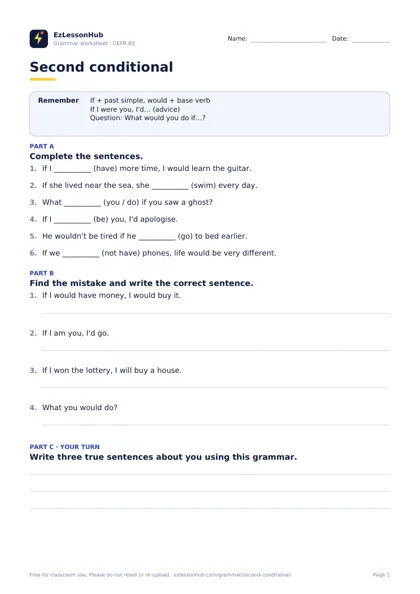
Imaginary or unlikely situations in the present or future.
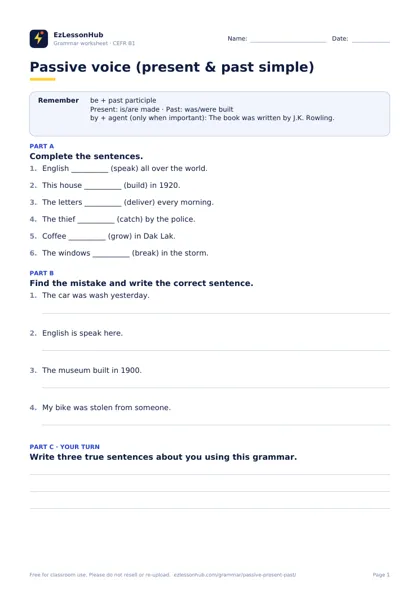
Focus on the action or the thing affected, not who did it.
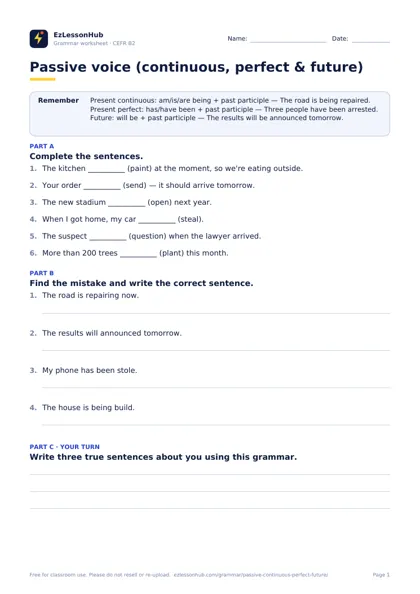
The passive in every tense: is being done, has been done, will be done, was being done, had been done.
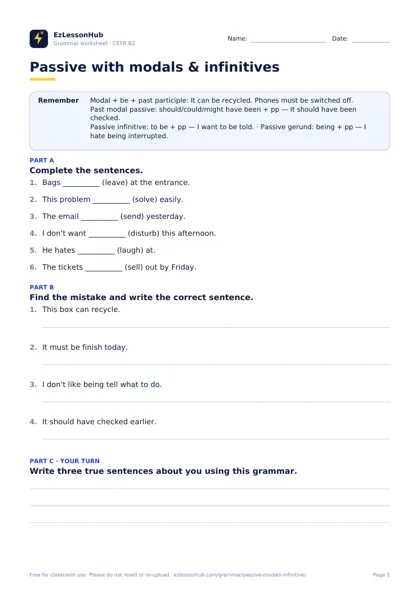
can be done, must be done, should have been done, want to be told, enjoy being asked.
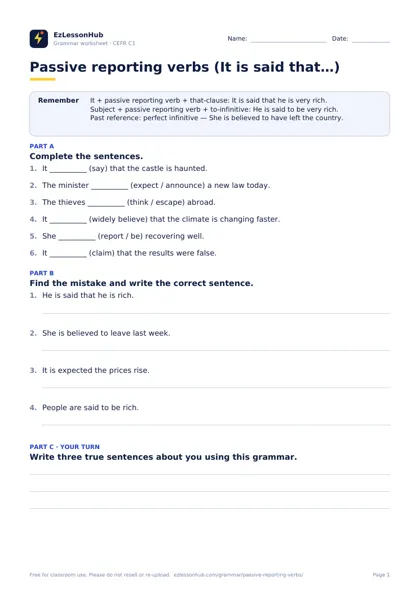
Impersonal passive for news and academic style: It is believed that… / He is said to be…
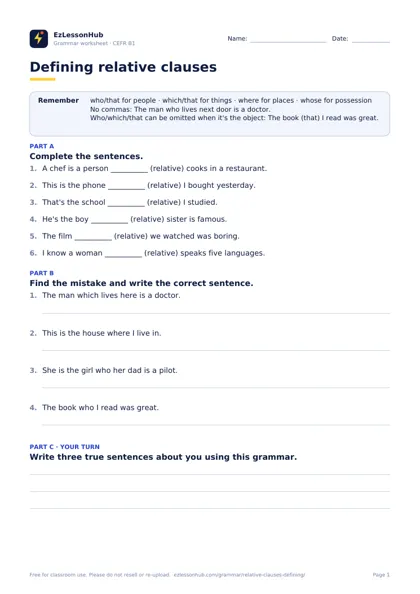
who, which, that, where, whose — to identify which person or thing we mean.
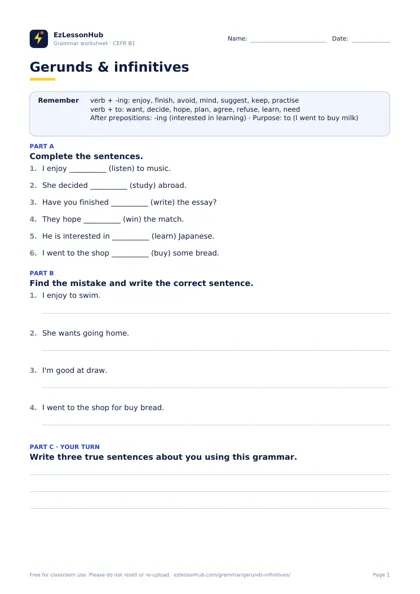
Which verbs are followed by -ing and which by to + infinitive.
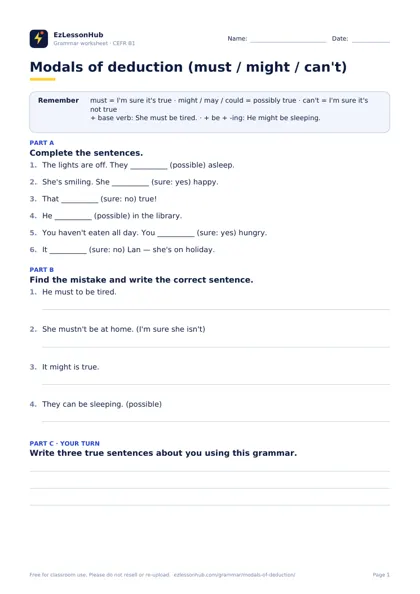
Say how sure you are about something in the present.
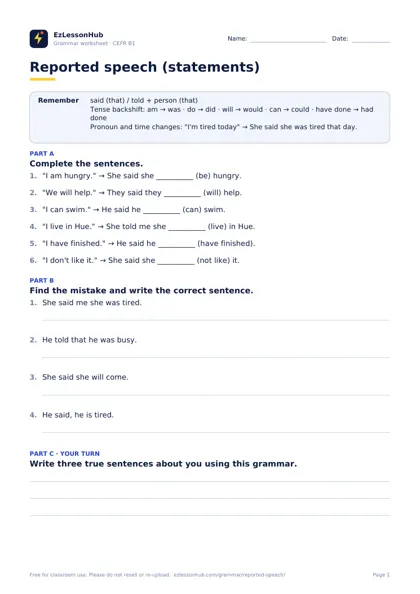
Report what someone said, usually moving tenses back.
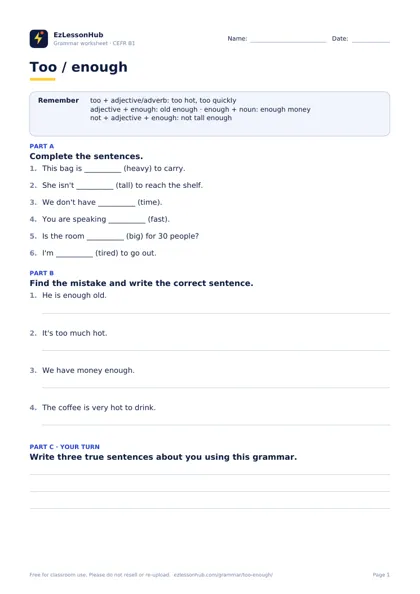
Say there is more or less than needed.
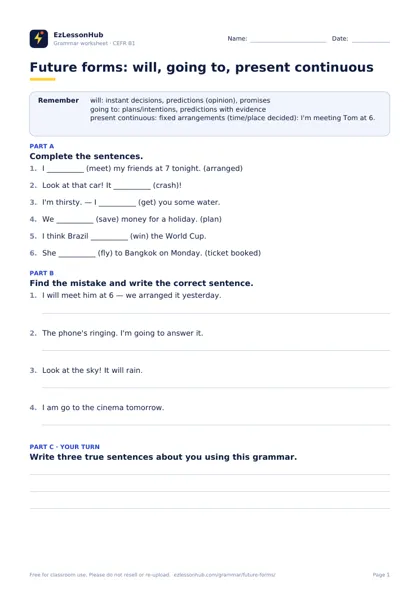
Choosing the right future: decisions, plans and arrangements.
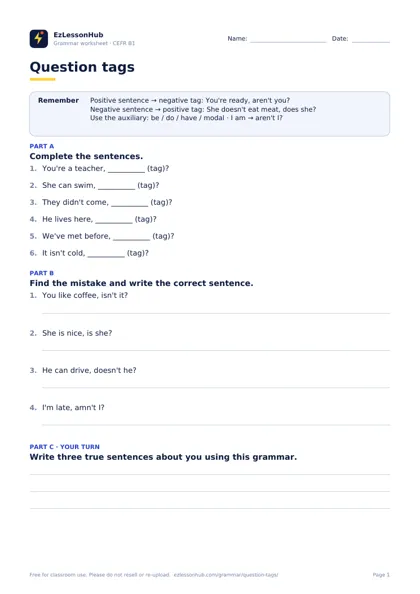
Short questions at the end of a sentence to check or confirm.
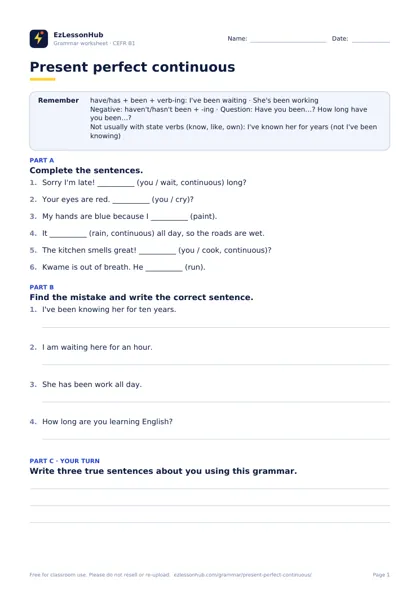
For activities that started in the past and are still going on, or that have just stopped and have a result now.
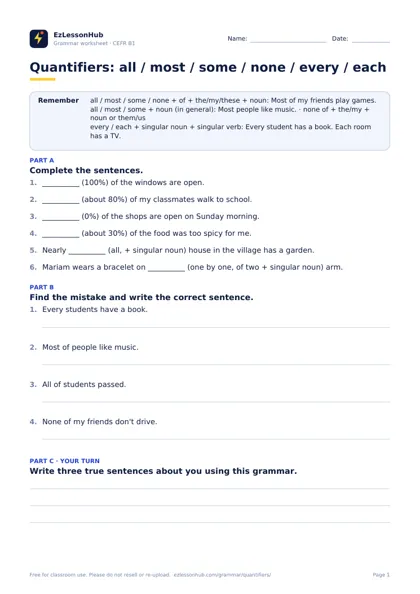
Say how many or how much of a group: all, most, some, none, every and each.
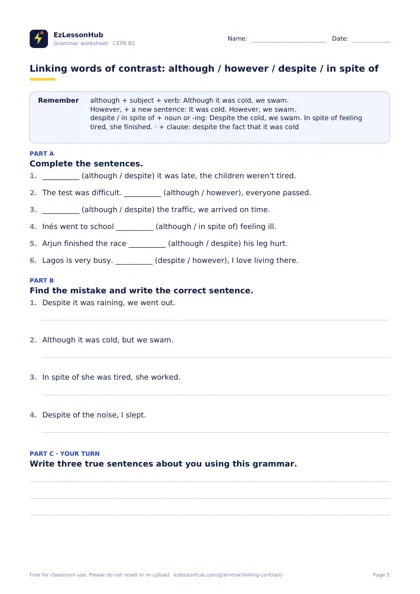
Join two different or surprising ideas with although, however, despite and in spite of.
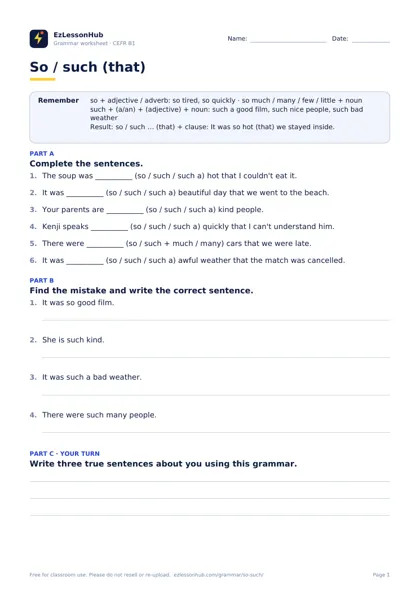
Use so and such to make adjectives and nouns stronger, and so/such … that to show a result.
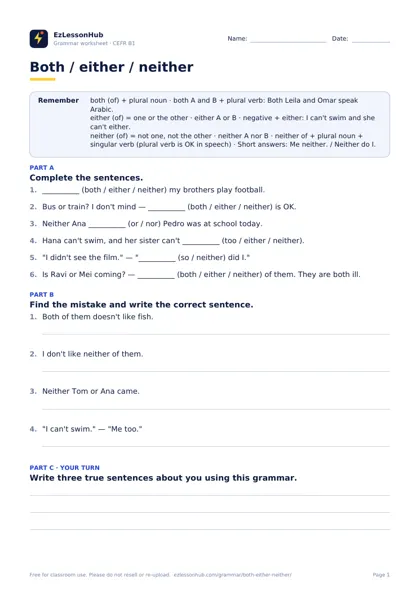
Talk about two people or things: both = the two, either = one or the other, neither = not one and not the other.
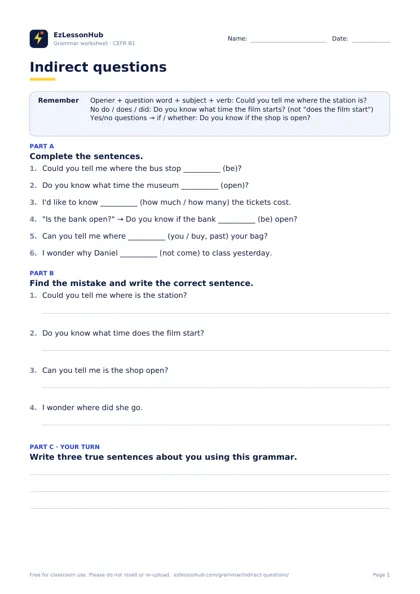
Polite questions that start with a phrase like "Could you tell me…?" and use statement word order.
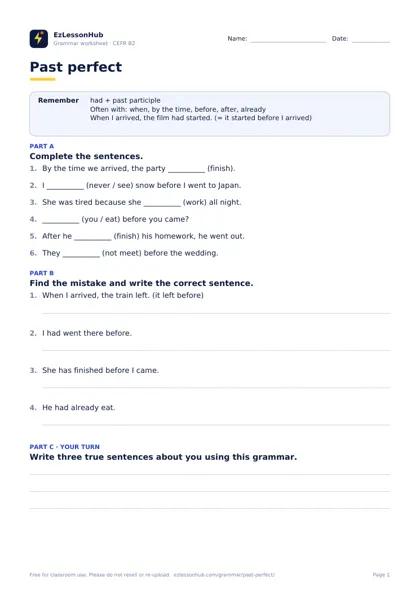
An action that happened before another past action.
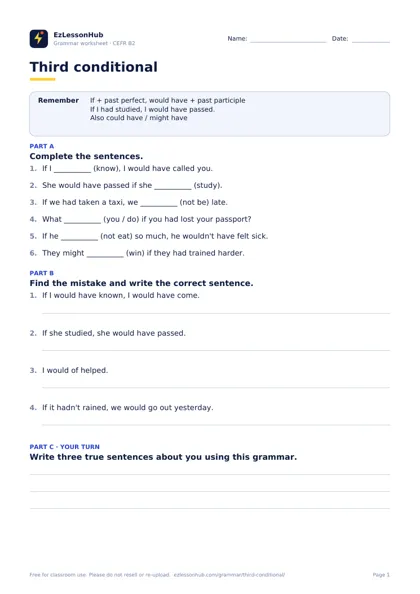
Imagine a different past and its result — regrets and criticism.
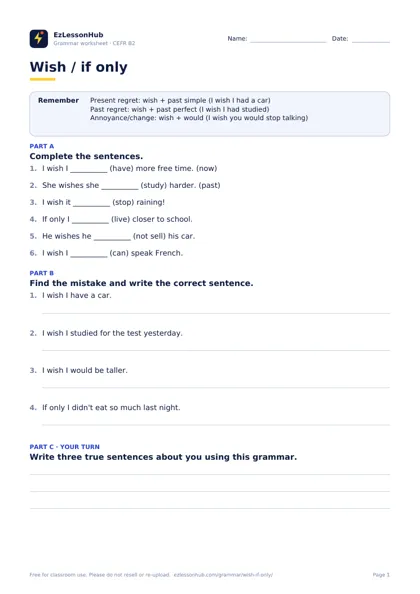
Express regrets about the present and the past.
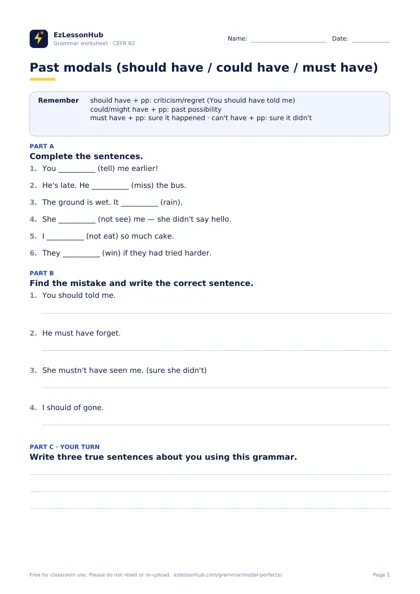
Criticism, regret and deduction about the past.
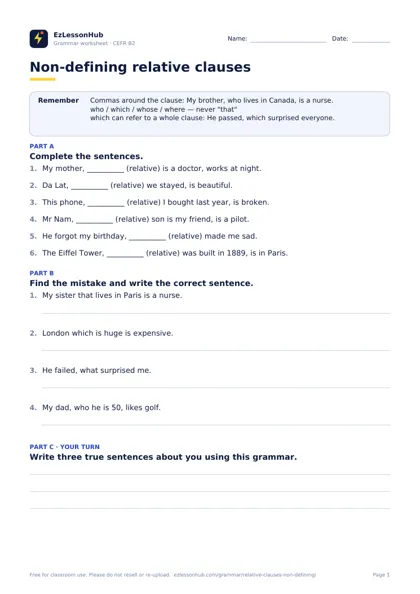
Add extra information with commas — the sentence is clear without it.
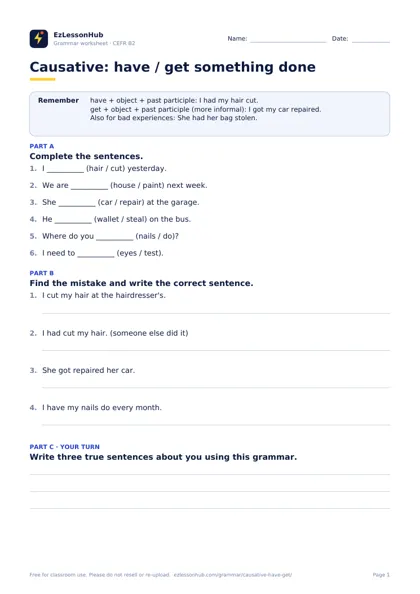
Someone else does a service for you.
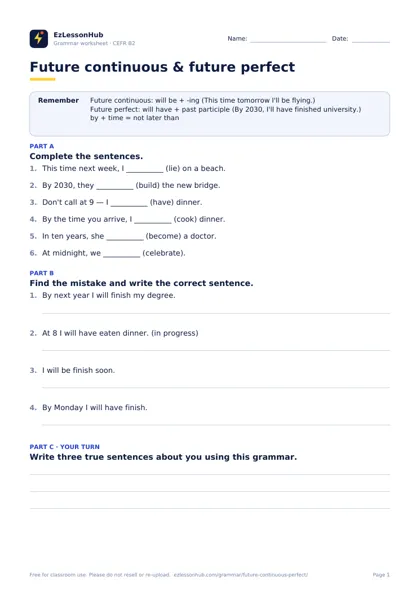
Actions in progress at a future time, and actions completed before a future time.
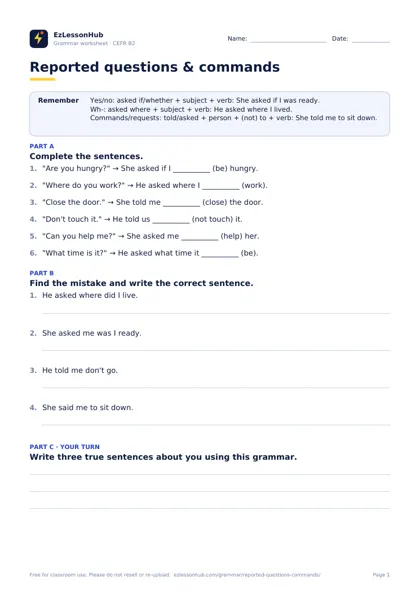
Report questions (no question word order) and requests/orders.
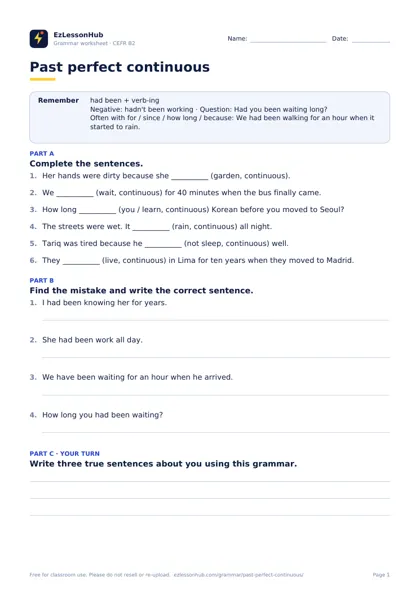
An activity that continued up to a moment in the past, often to explain a result or show how long.
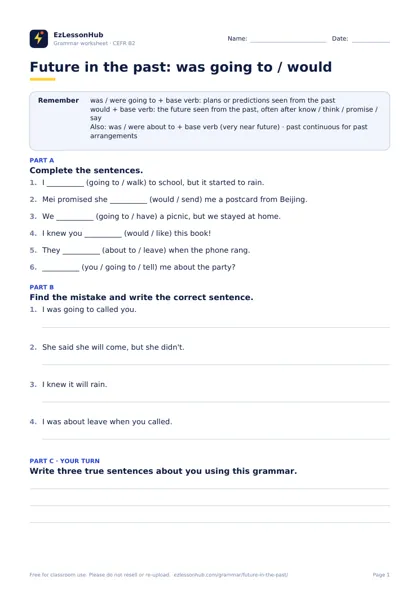
Talk about the future as it looked from a moment in the past: plans that changed, predictions and promises.
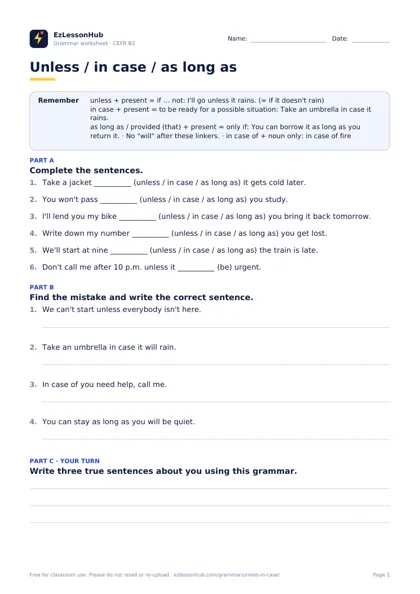
Conditional linkers: unless = if not, in case = to be ready for something possible, as long as = only if.
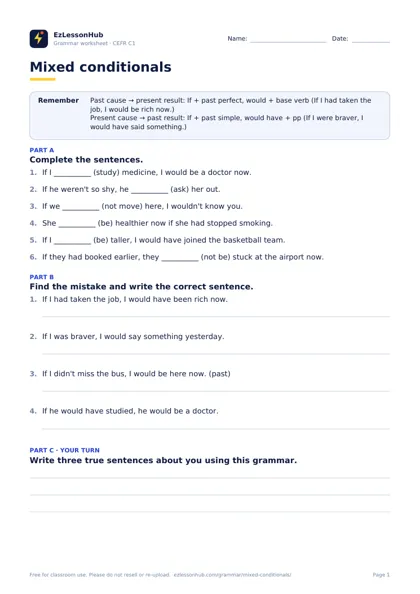
Mix past causes with present results (and vice versa).
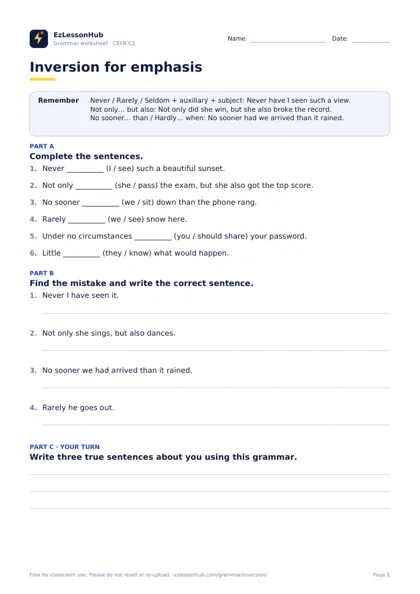
Negative and limiting adverbials at the front of a sentence, followed by question word order.
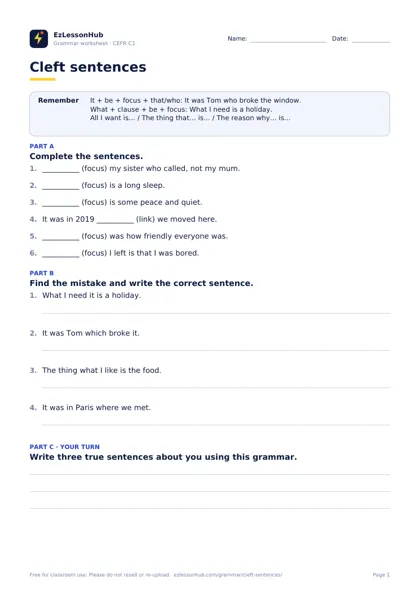
Split a sentence to focus on one part: It was… that / What… is…
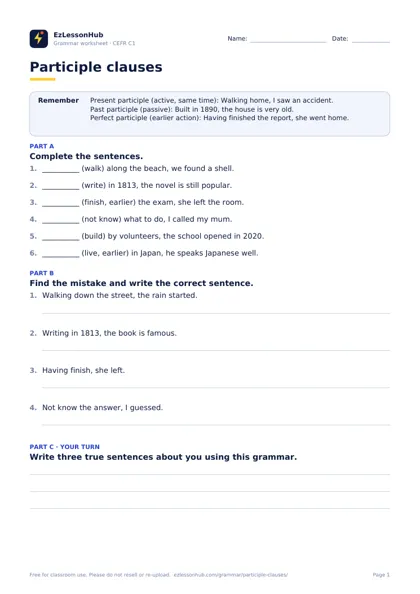
Shorten clauses with -ing, past participle or having + pp — common in writing.
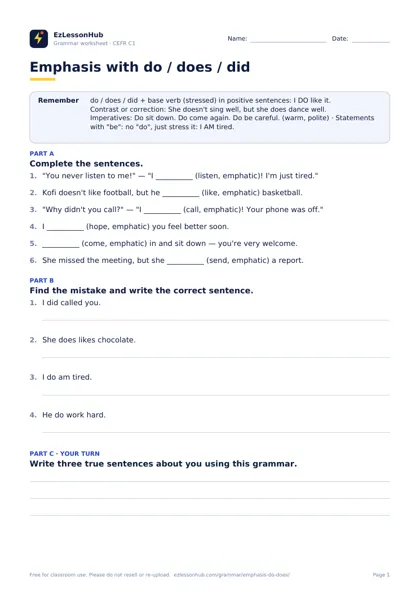
Add a stressed do, does or did before the main verb to contradict, contrast or show strong feeling.
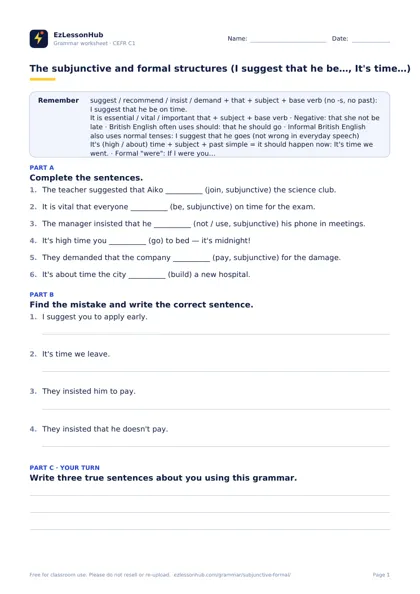
Formal patterns for recommendations and requirements (base form for every person), plus "It's time + past simple".
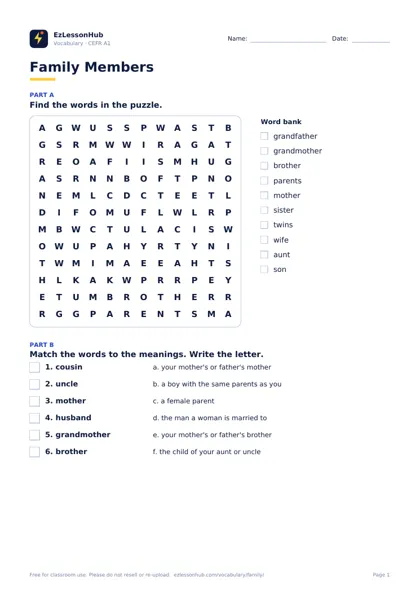
Words for talking about your family and family trees.
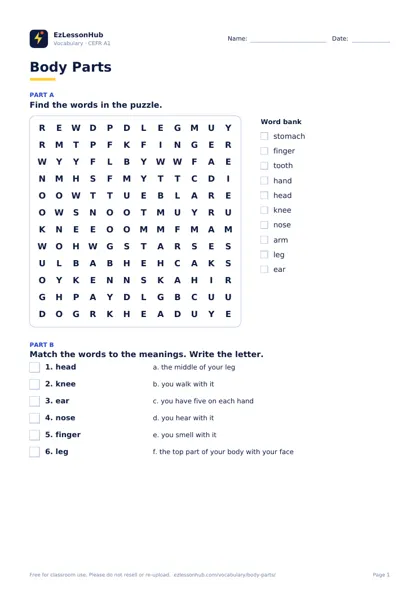
Parts of the body — perfect for songs, Simon Says and health topics.
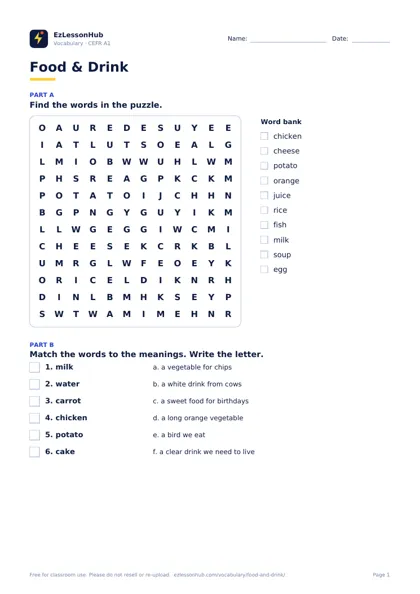
Everyday food and drinks for menus, shopping and likes/dislikes.
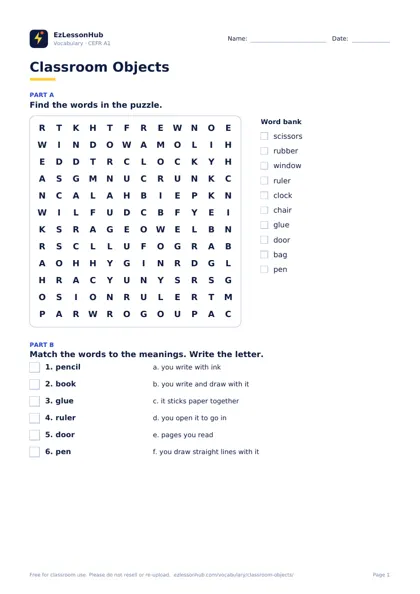
Things in the classroom — the first vocabulary set for young learners.
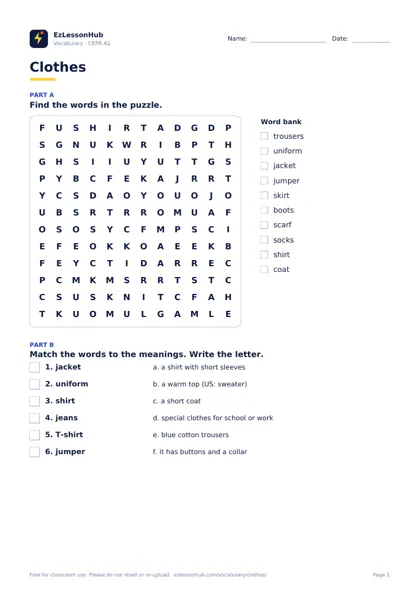
Clothes and accessories for describing people and shopping.
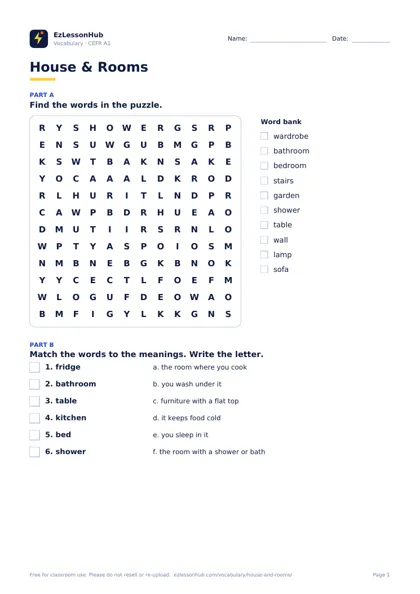
Rooms and furniture in the home.
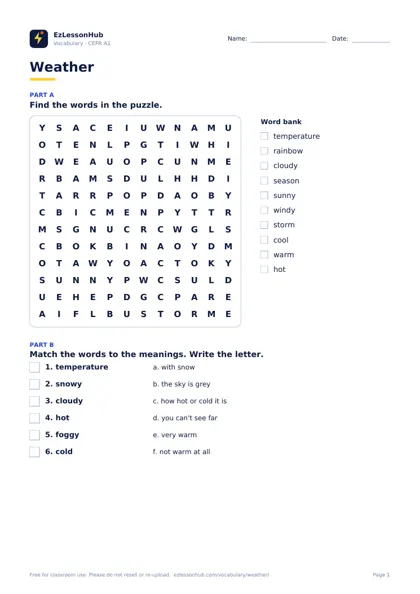
Weather words for daily routines, seasons and forecasts.
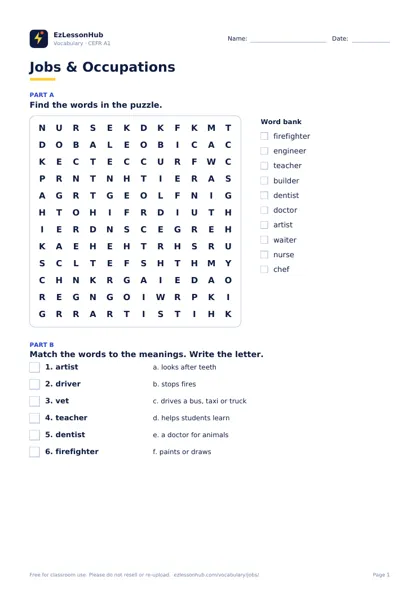
Common jobs and what people do at work.
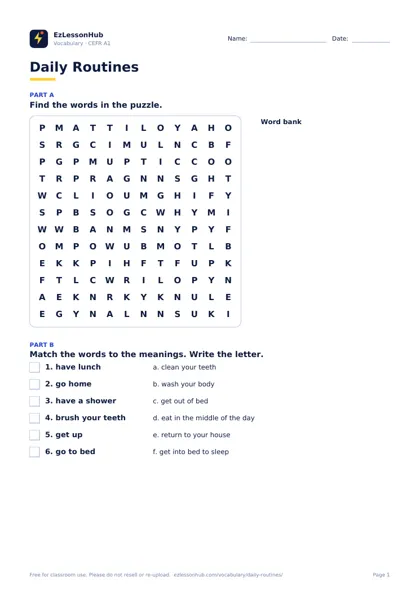
Verbs and phrases for everyday activities.
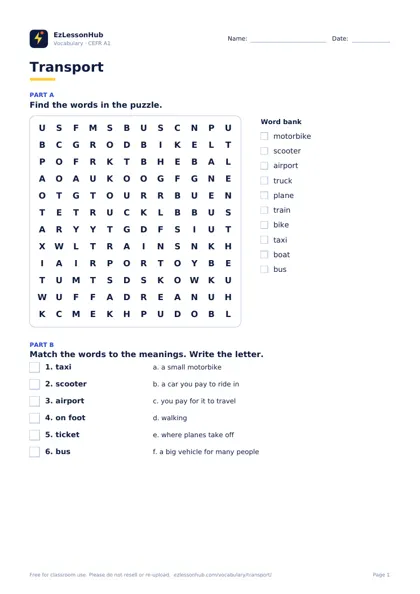
Ways to travel and transport vocabulary.
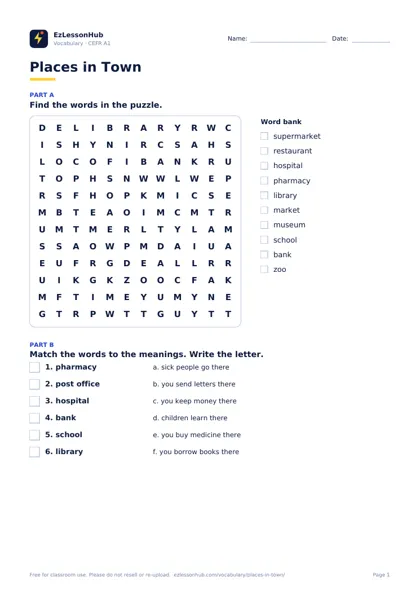
Buildings and places for giving directions.
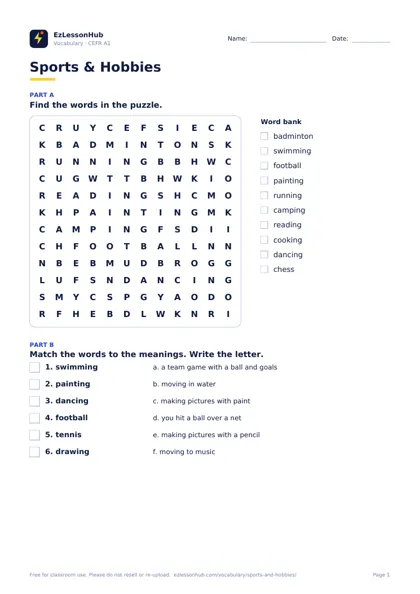
Free-time activities and sports with play/go/do.
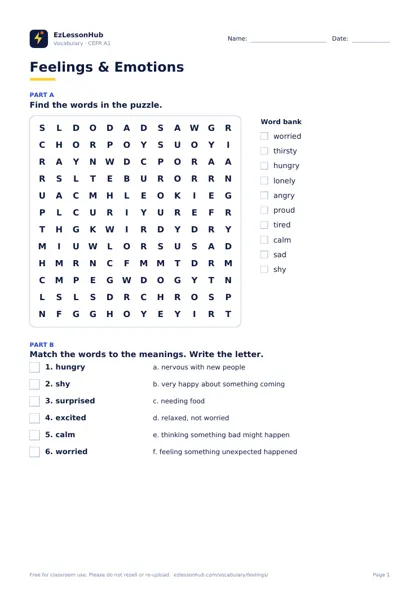
Words to describe how we feel.
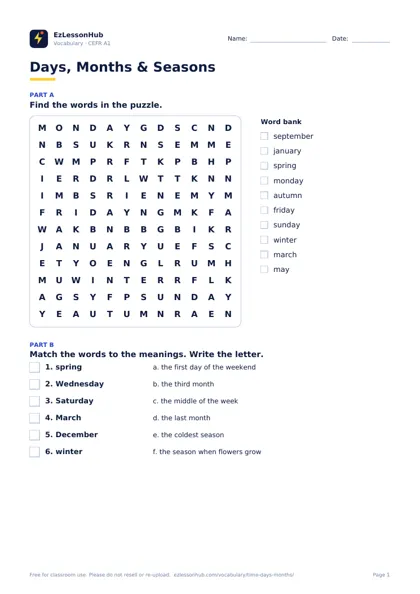
Calendar vocabulary for dates, birthdays and routines.
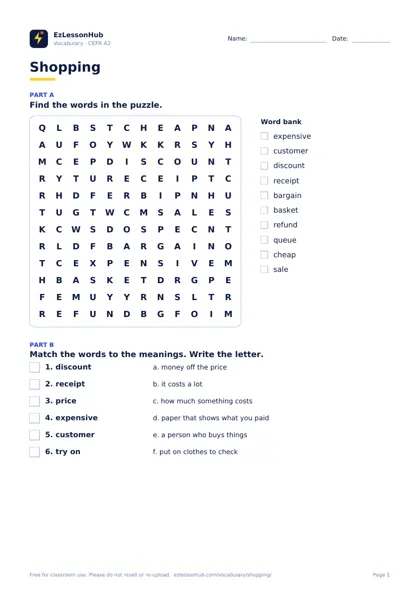
Words and phrases for buying things.
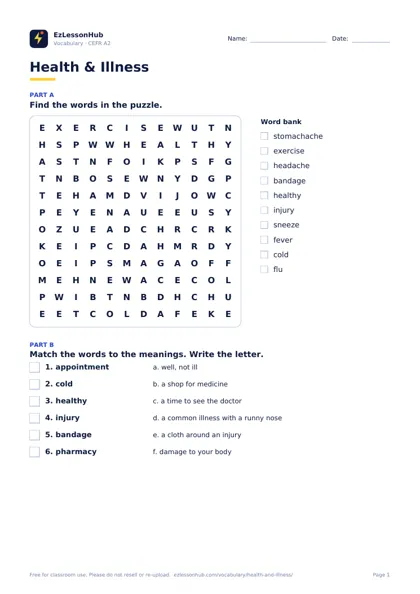
Common illnesses, symptoms and remedies.
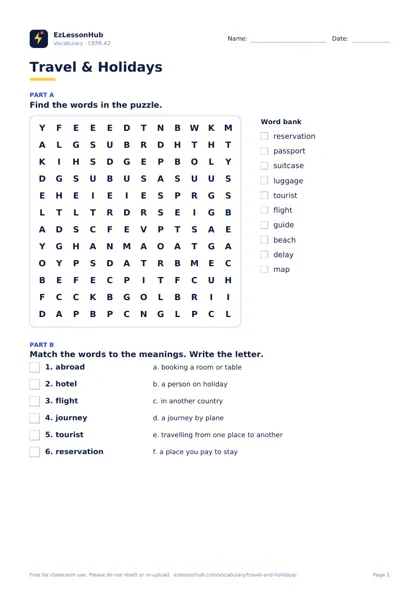
Words for trips, airports and hotels.
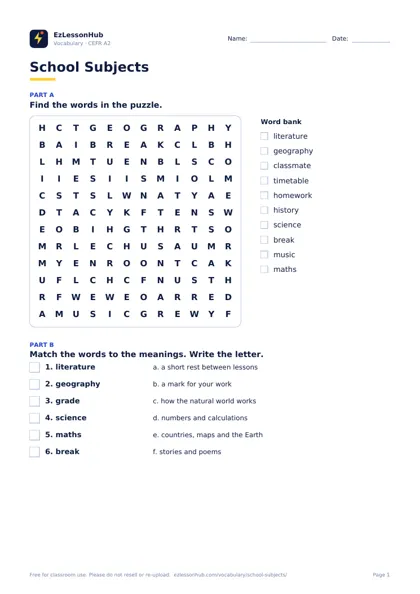
School subjects and school life.
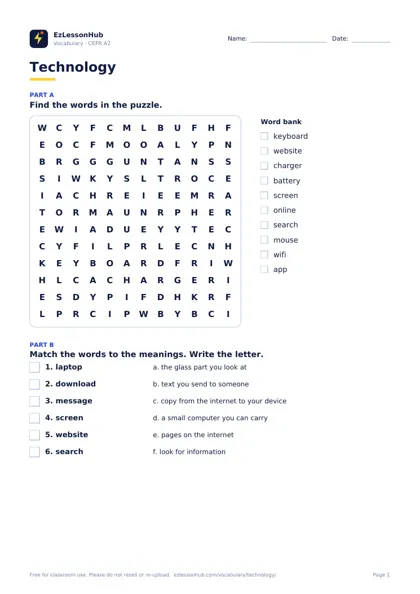
Digital devices and internet vocabulary.
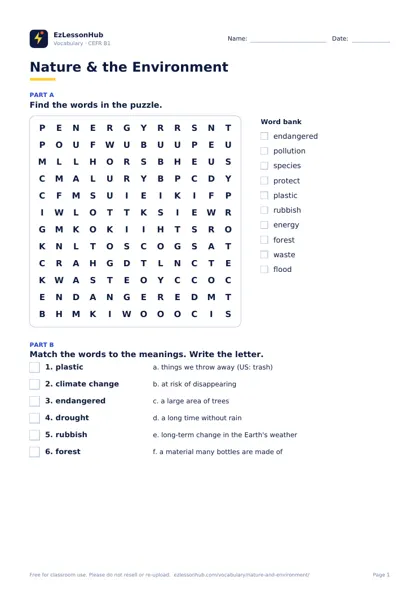
The natural world and environmental issues.
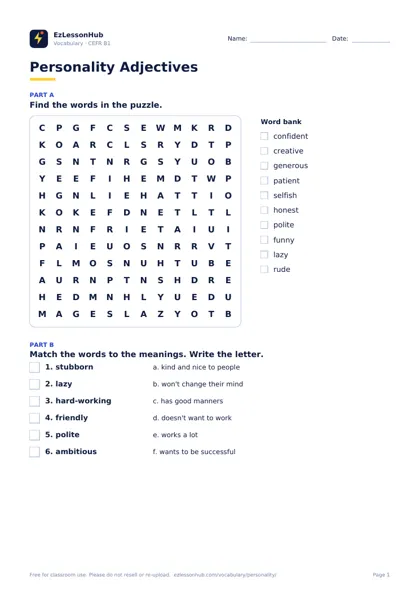
Words to describe people's character.
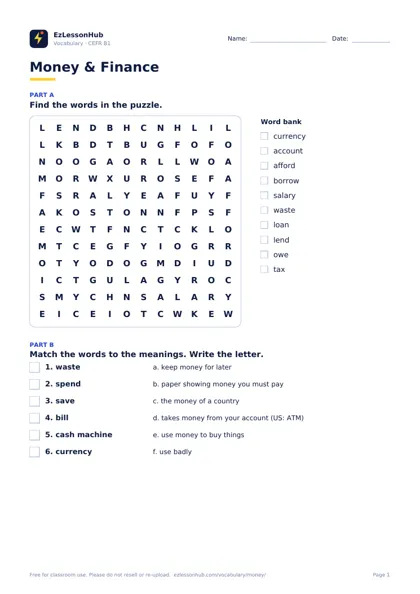
Everyday money vocabulary.
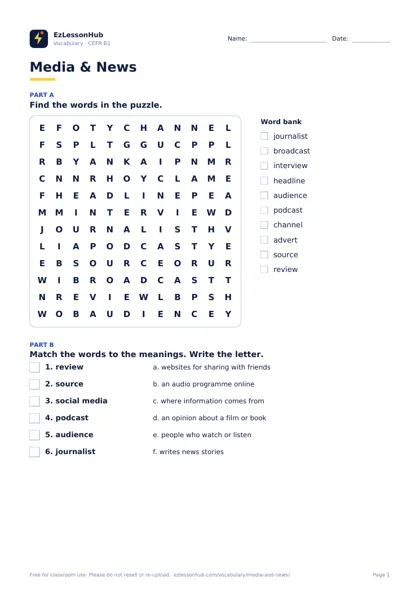
Newspapers, TV, social media and journalism.
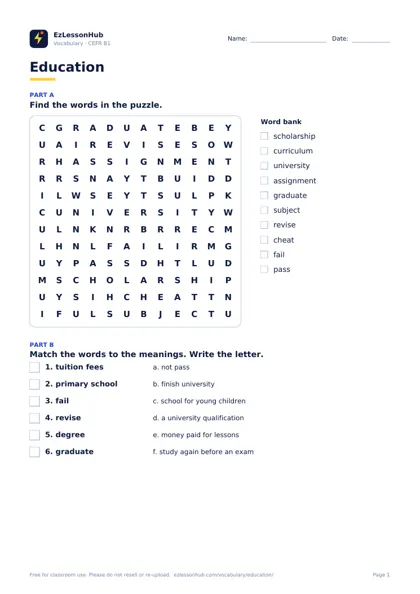
Study, school systems and learning.
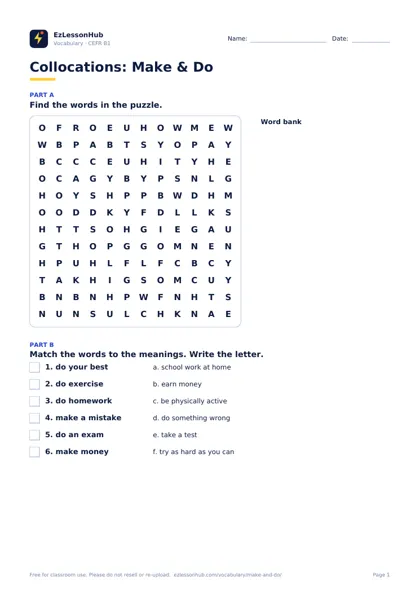
Common collocations with make and do — a frequent error area.
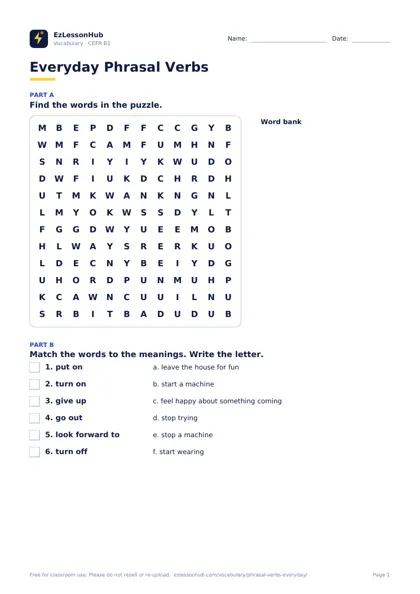
High-frequency phrasal verbs for daily life.
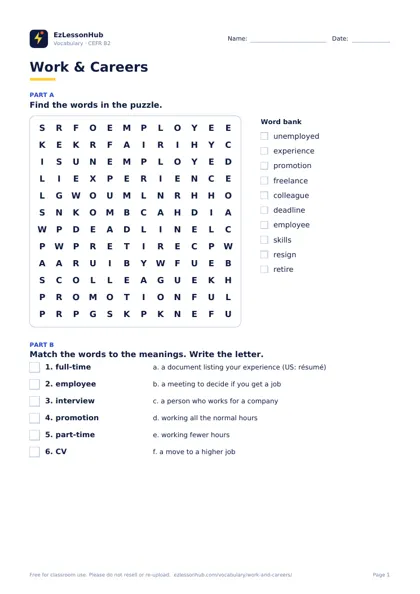
Vocabulary for jobs, applications and the workplace.
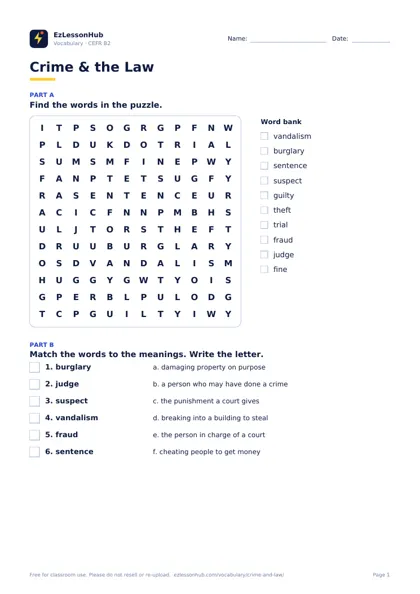
Crimes, criminals and the justice system.
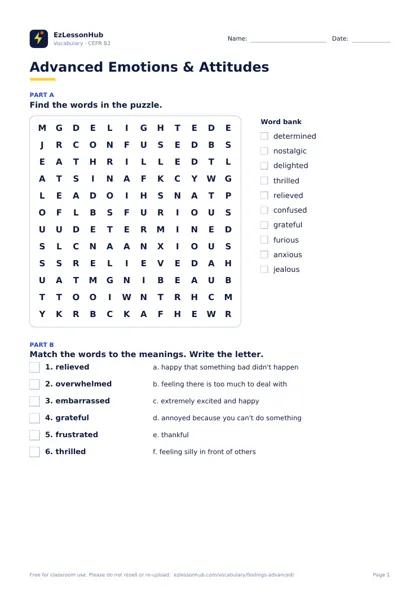
Nuanced adjectives for feelings and reactions.
Looking for grammar, vocabulary, games or templates? See all results for “” across EzLessonHub →
We're adding new resources regularly. Tell us what you'd like next on our YouTube channel — we read every comment.
Enter your email to unlock . Your download starts right away.
One email unlocks every teacher download on this device. We'll occasionally send new free resources — unsubscribe anytime. Privacy