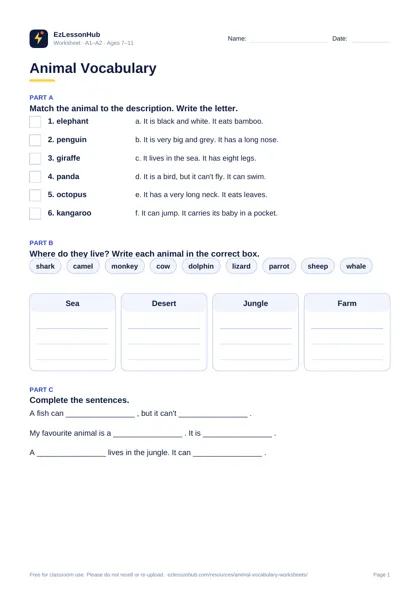
Animal Vocabulary Worksheets
Match, sort, and describe 15 animals. A core page, a challenge page, and a speaking game — plus an answer key.
Learners understand and use familiar everyday expressions and very basic phrases. They can introduce themselves, ask and answer simple personal questions, and interact simply if the other person speaks slowly and helps.
Lots of listening, TPR, repetition and visuals. Teach chunks (What's your name?) before grammar rules. Keep tasks short and highly supported.
Approx. guided learning hours: 90–100
Exams: Cambridge A1 Movers · Pre A1 Starters (young learners)
Match, sort, and describe 15 animals. A core page, a challenge page, and a speaking game — plus an answer key.
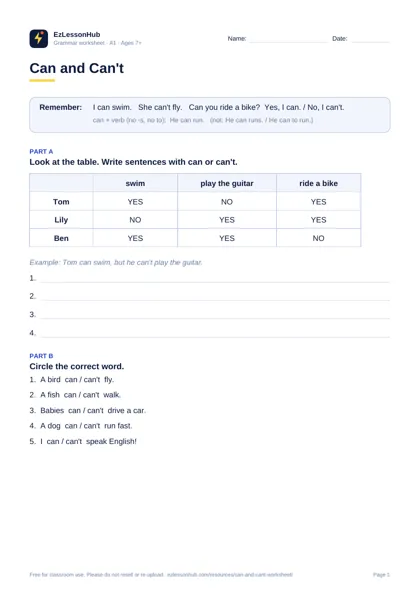
A clear grammar box, controlled practice, a class survey, and a personal writing task for teaching can and can't.
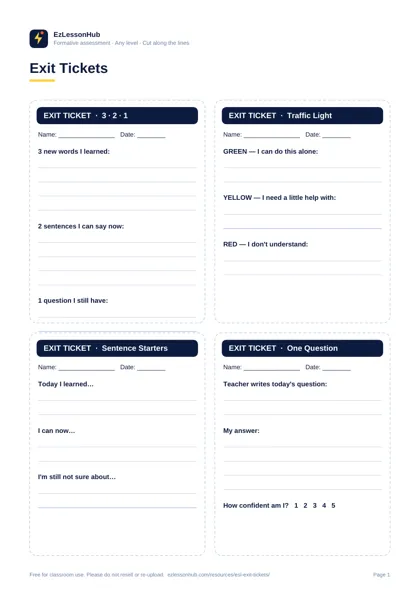
Four exit-ticket formats — 3-2-1, traffic light, sentence starters, and one question — to check learning in the last five minutes.
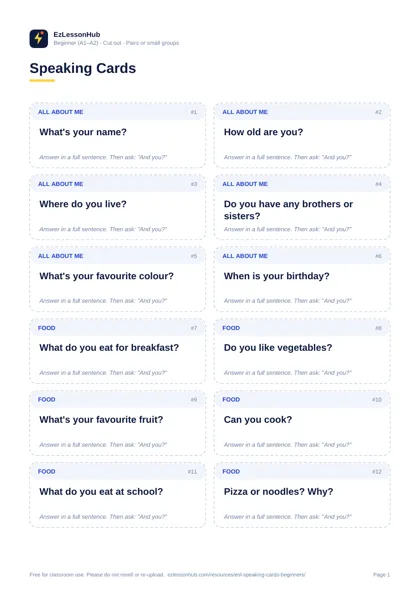
24 beginner question cards across four everyday topics, ready to cut out for pairs and small groups.
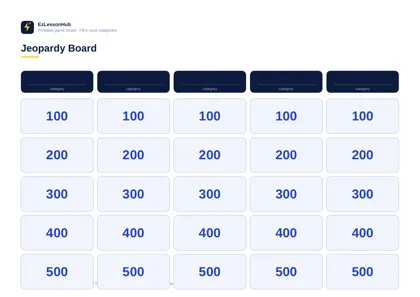
A printable 5 × 5 Jeopardy board, a question planner, and a four-team scoreboard — no slides needed.
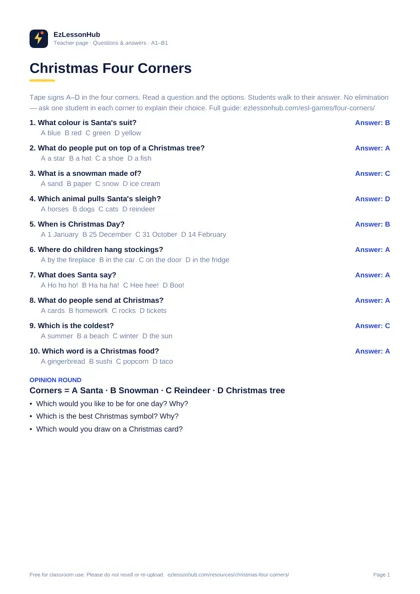
Four large corner signs plus 10 Christmas quiz questions and an opinion round — print, tape, play.
Enter your email to unlock . Your download starts right away.
One email unlocks every teacher download on this device. We'll occasionally send new free resources — unsubscribe anytime. Privacy